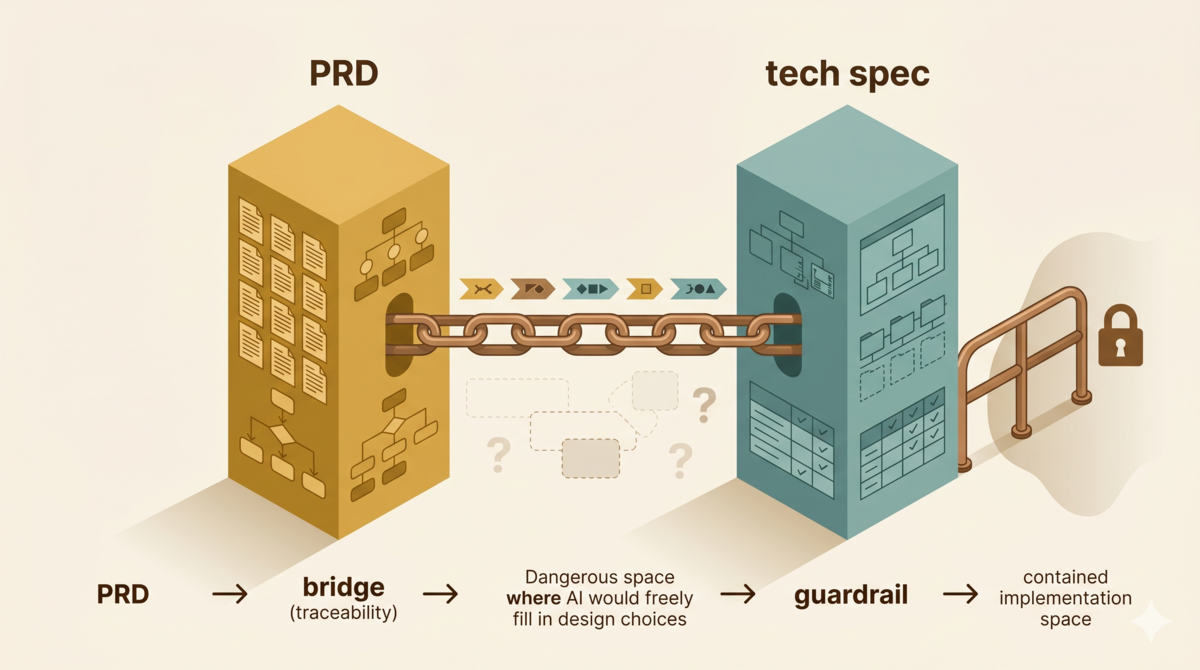
PRD to tech spec: documents as guardrails, not burden

Why PRD Alone Is Not Enough: What the Tech Spec Must Cover in AI-Assisted Development

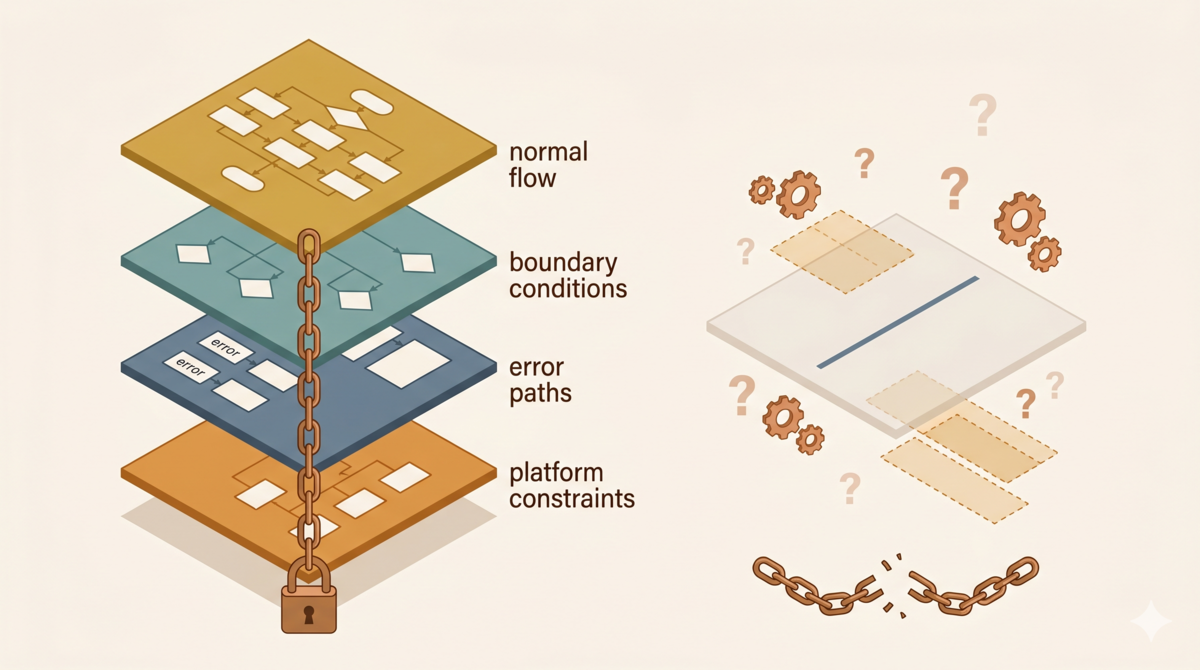
This is the third article in the “Taming AI Coding Agents with TDD” series. The first covered test-driven requirements anchoring, the second covered the GEAR protocol for requirements disambiguation. This one fills the gap between them: after the PRD is done, what must the tech spec cover? Requirements Locked, Code Still Wrong Before the second Aristotle refactor, I spent two full days writing requirements. Following the structured approach from the previous article, I captured every acceptance criterion, boundary condition, error path, and platform constraint[1]. The AI consumed the document, passed all 37 static assertions plus end-to-end tests. The codebase was split into four files by responsibility. Information flow was switched from push to pull. ...
2026-04-29 · 11 min · Alex Wang
Structured requirements vs one-liner: the trap of AI auto-filling gaps

Why AI-Assisted Development Needs Structured Requirements First: Lessons from the GEAR Protocol

This is the second article in the “Taming AI Coding Agents with TDD” series. The first article covered requirement anchoring at the test layer[1]. Tests assume clear requirements. This one goes upstream: to the practice of disambiguating requirements before a single line of code gets written. The v1 Lesson: One-Line Requirement, 371 Lines of Pollution Aristotle v1 had no GEAR protocol[2]. No role separation. The entire reflection feature lived in a single 371-line SKILL.md. The requirement was roughly one sentence: the system should detect when a user corrects an AI mistake, then generate a reusable rule. ...

2026-04-25 · 8 min · Alex Wang