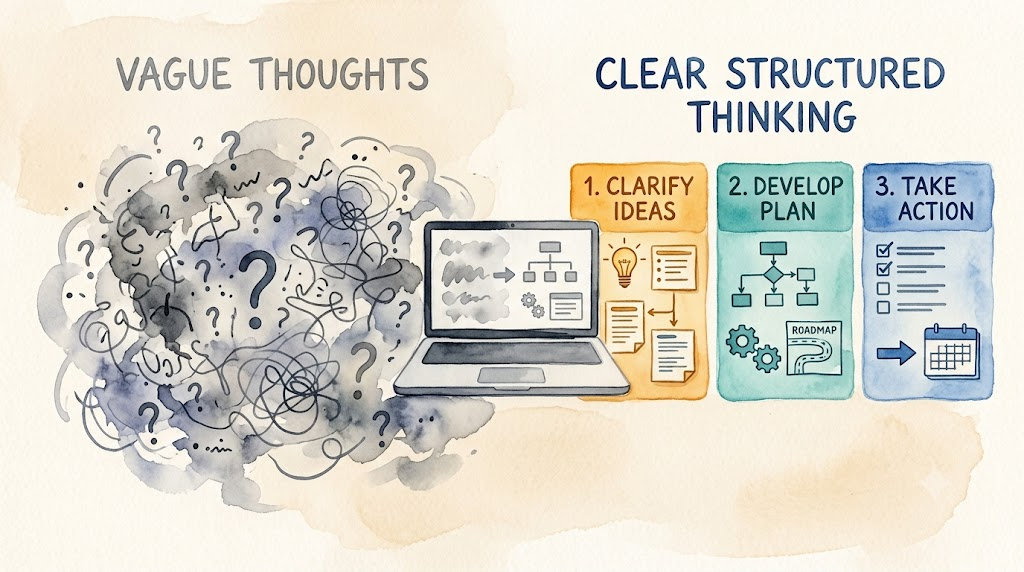
A ruler measuring its own scale marks for redundancy, then trimming the excess marks away

Using the Method to Improve the Method

Series: Breaking to Build: TDD Process Iterations (second post) Previous: What a Failed Experiment Got Right TL;DR: The TDD Pipeline taught “give principles, not steps” — but it had grown into a step-driven tool itself. I stripped the operational steps from Phases 1 through 5, keeping only principles, risk hints, and counterexamples. The model independently derived the steps I had deleted. Output quality held. The reason: Phases 1 through 5 are creative phases that need room to diverge. Removing the fixed track actually helped. The same strategy failed on Phase 6 — next post explains why. ...

2026-05-20 · 6 min · Alex Wang
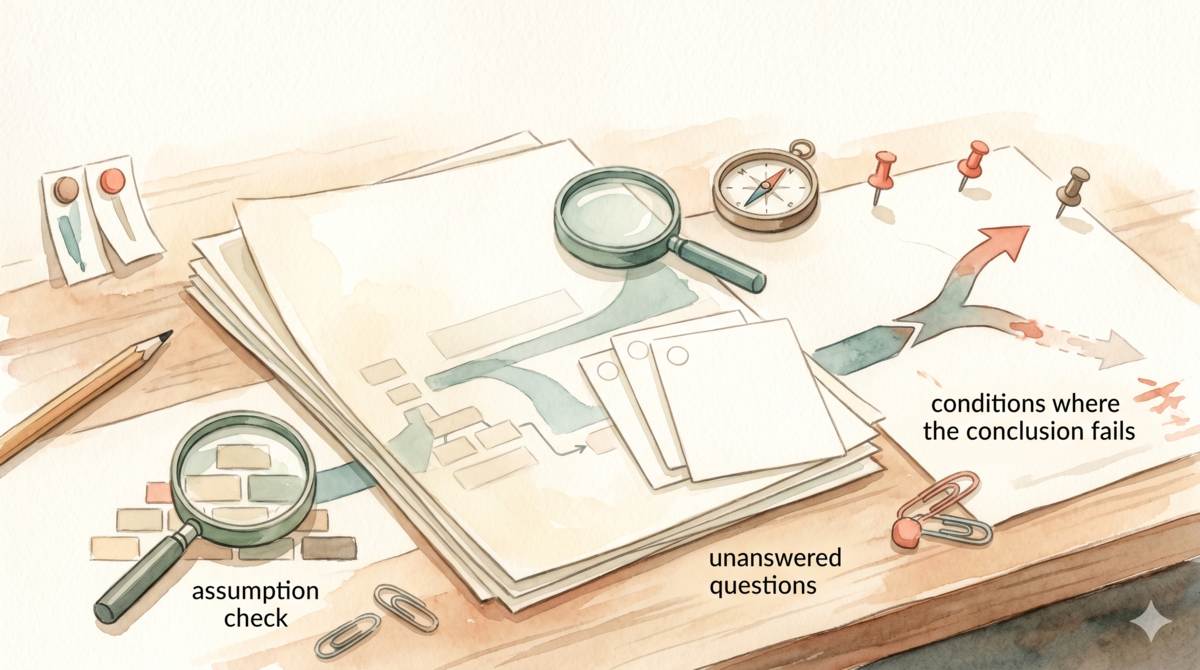
Three objects on warm cream: a compass, a crossed-out stamp, and a blank card with a hand-drawn arrow

The Upgrade — New Template and Three Transferable Lessons

TL;DR: Before-and-after comparison of the upgraded Why Articulation template, plus three transferable lessons: give principles not examples, lock critical steps with mandatory tone, and trust the model’s self-organization. Experiment limitations included. Series: Why Make AI Articulate Why Before Acting (Article 3) Previous: A 4-Variable A/B Test — Why Positive Examples Harm Prompt Performance Recap Article 1 started from Anthropic’s alignment research: teaching a model why rather than what cut misalignment from 22% to 3% (about 7×), and achieved equivalent results with 1/28 the data [1]. I adapted this into Why Articulation — a mechanism that forces AI to explain purpose, risks, and approach before writing any code. ...

2026-05-17 · 8 min · Alex Wang
Left: a stamp copying identical patterns. Right: freeform marks for independent thinking. Red X marks the imitation path as wrong

A 4-Variable A/B Test — Why Positive Examples Harm Prompt Performance

TL;DR: A 4-variable A/B test on Why Articulation — structure, tone, position, and examples. Positive examples made output worse. The model imitated instead of reasoning. Open-ended prompts improved quality directionally and cut tokens by 33%. Series: Why Make AI Articulate Why Before Acting (Article 2) Previous: From Anthropic’s Alignment Research to a Prompt Design Insight Where We Left Off Anthropic’s alignment research [1] landed on a sharp insight: teaching a model why beats telling it what. I took that idea and built Why Articulation into my TDD Pipeline — a mechanism that forces the model to explain its understanding before it writes any code. Early results looked good. ...

2026-05-15 · 8 min · Alex Wang
An arched gateway inscribed with WHY, two rods of different length and color on the ground

From Anthropic's Alignment Research to a Prompt Design Insight

TL;DR: Anthropic’s alignment research shows that teaching a model why works better than teaching it what — misalignment dropped from 22% to 3%. This post breaks down four experiments and distills three lessons you can use in prompt design. I ran an A/B test comparing two prompt strategies. One group got positive examples — “do it like this.” The other got no examples. Instead, the AI had to explain why a choice was correct before acting on it. ...

2026-05-14 · 7 min · Alex Wang