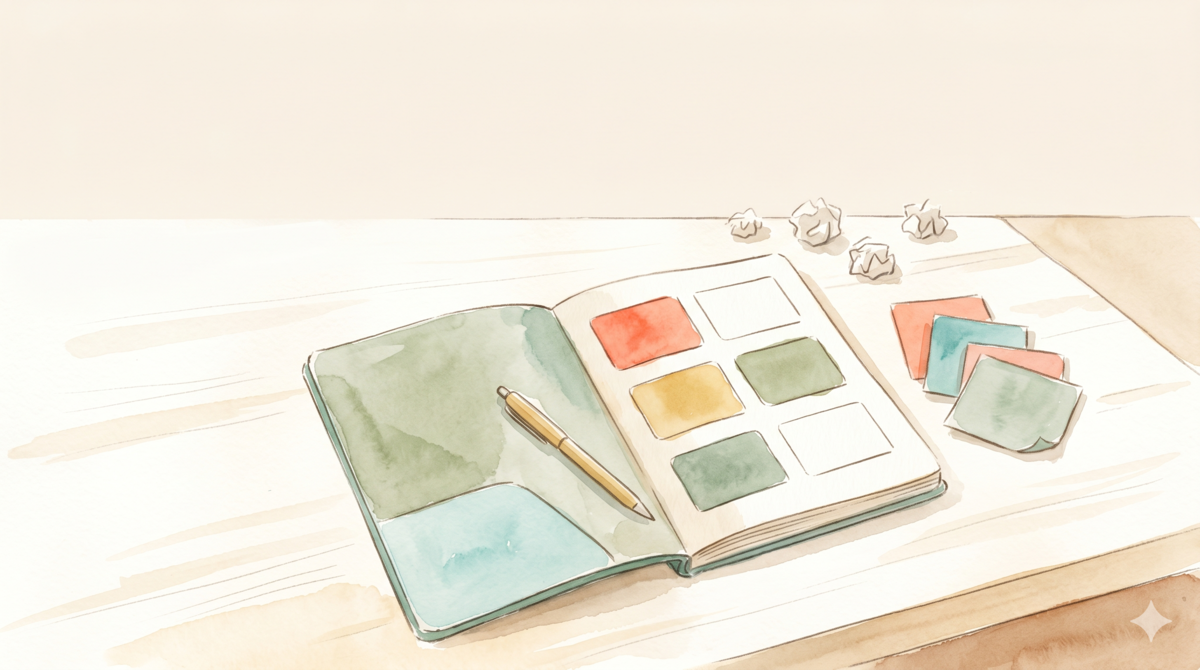
Watercolor style: an open notebook with five card-shaped slots, three filled with colored cards and two blank, scattered sticky notes nearby, a warm cream desk surface

Today's Practice: Organize Your First 5 Prompts

Today’s Practice From your recent AI conversations — coding, writing, analysis — pick 5 prompts that actually worked well. Record them using the template from Part 4: original prompt + effectiveness rating + iteration notes. Where you record them doesn’t matter — a notes app, Notion, a plain text file. Don’t overthink the tool. If you can’t find your chat history, spend 20 minutes creating 5 prompts you’ll definitely use at work. For example: “Check the edge cases in this code,” “Rewrite this technical article for beginners,” “Extract the 3 main issues from these 100 user feedbacks.” ...

2026-05-27 · 2 min · Alex Wang
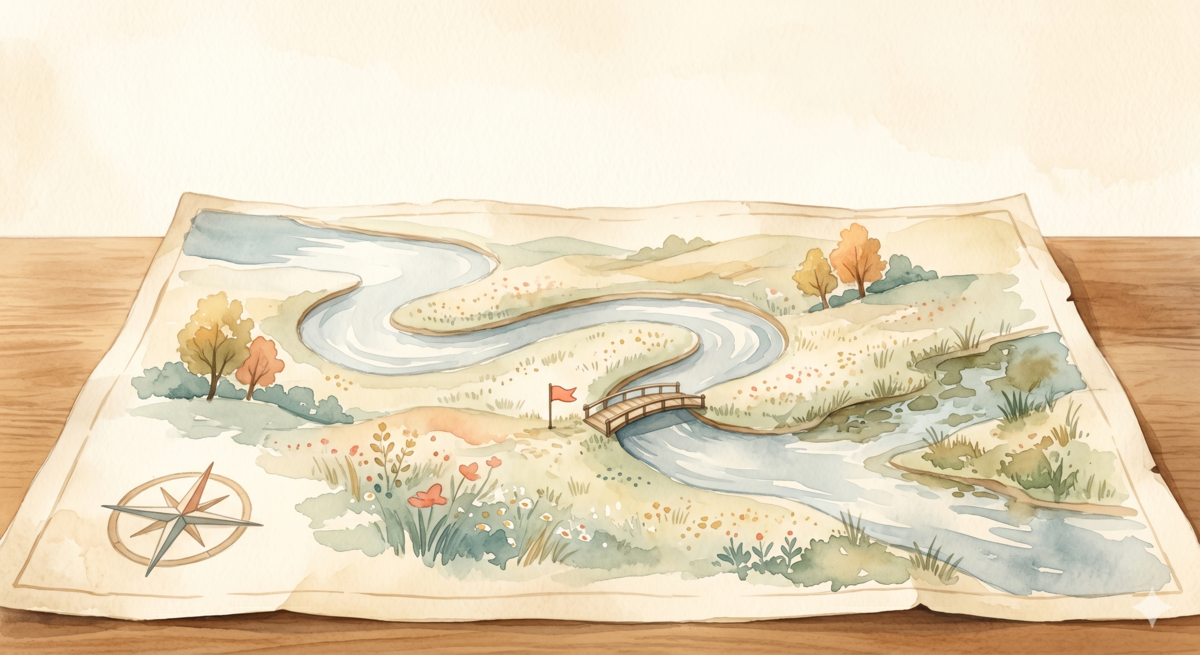
Watercolor style: a winding river flows from upper left to lower right, with a small ferry crossing marker in the middle, symbolizing a progress calibration point in a long conversation

Today's Practice: A 15-Turn Conversation Experiment

Today’s Practice Pick a real multi-step task you have on hand, and hold a conversation with AI for at least 15 turns (one question + one answer = one turn). Example tasks: “Help me plan a family trip (destination, itinerary, budget, packing list)” “Help me set up a personal blog from scratch (pick a platform, choose a theme, write the first post)” “Help me analyze a career decision (take stock of where I am, pros and cons, action plan)” Don’t try to steer the conversation deliberately — let it unfold naturally. When the conversation reaches around turn 10, pause and send this message: ...

2026-05-22 · 2 min · Alex Wang
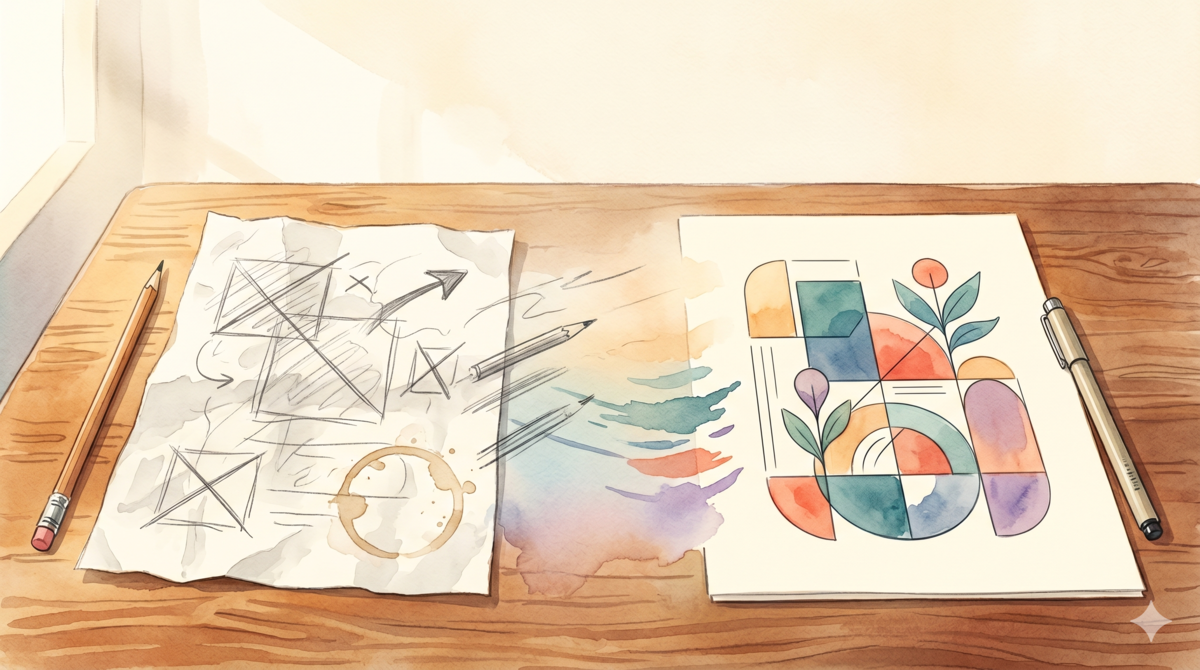
Watercolor illustration: a rough pencil sketch on the left transforming into a polished drawing on the right, connected by a soft arrow, symbolizing the rewrite from vague to precise

Practice: Rewrite Your First Question with RBGO

Today’s Practice Recall the first question you asked AI today (or recently) — the more casual, the better. Don’t cherry-pick. Ask it again exactly as-is. Save the answer. Now rewrite the same question using the RBGO framework: R (Role): Who should AI play — “senior ops manager”, “strict tech reviewer”, “patient teacher” B (Background): Your specific situation — target users, budget, timeline G (Goal): What you want — a strategy, a troubleshooting approach, an email draft O (Output): What format — 3 recommendations, table format, under 300 words Save the rewritten answer too. Put both side by side. ...

2026-05-17 · 2 min · Alex Wang
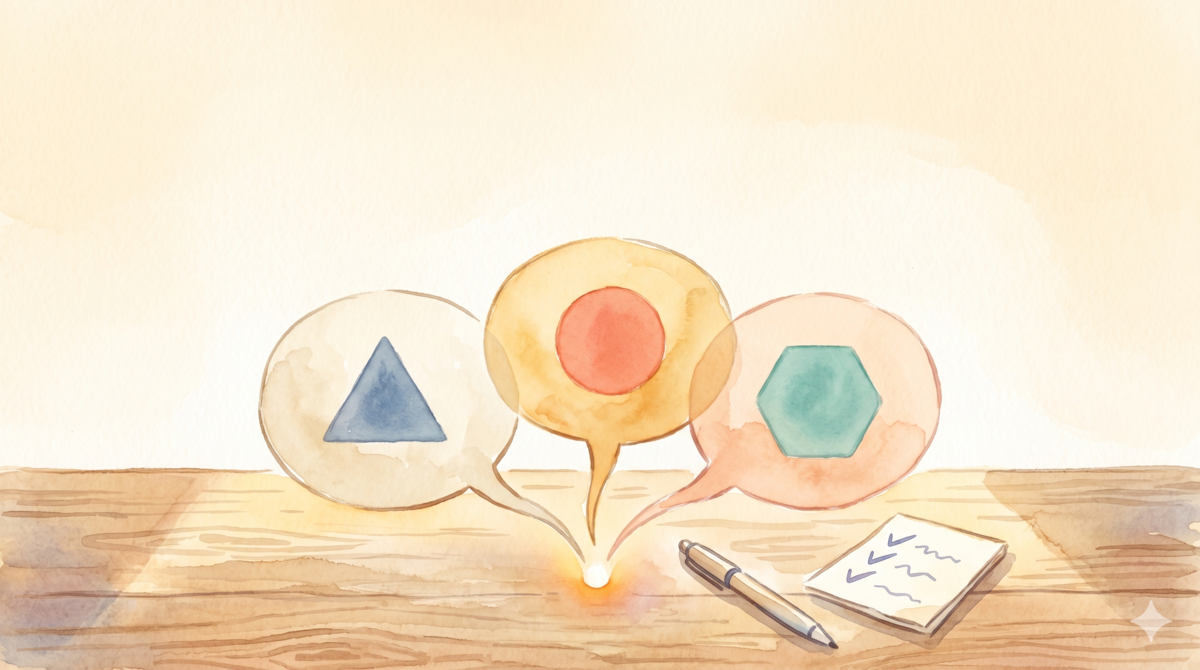
Watercolor illustration: three speech bubbles from one source, each with a different shape, symbolizing different answers to the same question

Practice Challenge: Ask AI the Same Question 3 Times

Today’s Challenge Open whatever AI you normally use — ChatGPT, Claude, DeepSeek, anything. Pick an open-ended question. Ask it 3 times. The question is up to you. Some examples: “How do I build a reading habit?” “Python tips for a complete beginner” “How can I run better meetings?” You can rephrase it each time or paste the exact same wording. The key rule: start a fresh conversation each time. Don’t follow up inside the same thread. Three new chats. ...

2026-05-12 · 2 min · Alex Wang