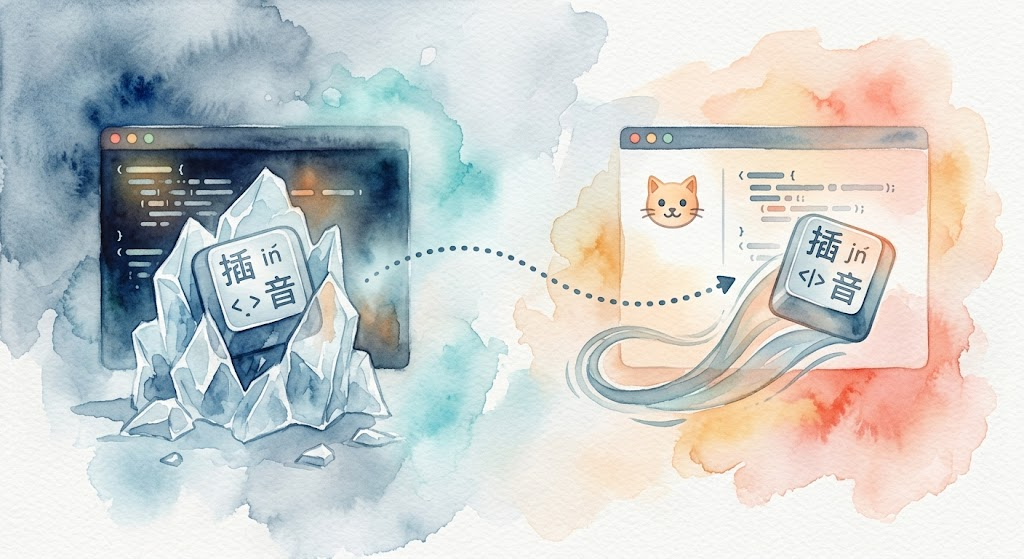
Watercolor: an IME icon stuck in front of Warp, then gliding smoothly past Kitty

From Warp to Kitty: An IME Freeze That Forced a Terminal Migration

Spending the entire day inside OpenCode made my terminal my IDE. But when even typing became a problem, switching was the only option. This started with a very specific, very annoying problem: Chinese IME freezing. Inside Warp running OpenCode, typing Chinese was nearly unusable. Every three to five characters, the system would freeze for seconds. Input stopped responding. When it recovered, it would swallow some of the characters I’d typed. At first I blamed OpenCode, thinking maybe it was consuming too many resources. But I checked other applications and typing was perfectly fine there. ...

2026-07-10 · 8 min · Alex Wang
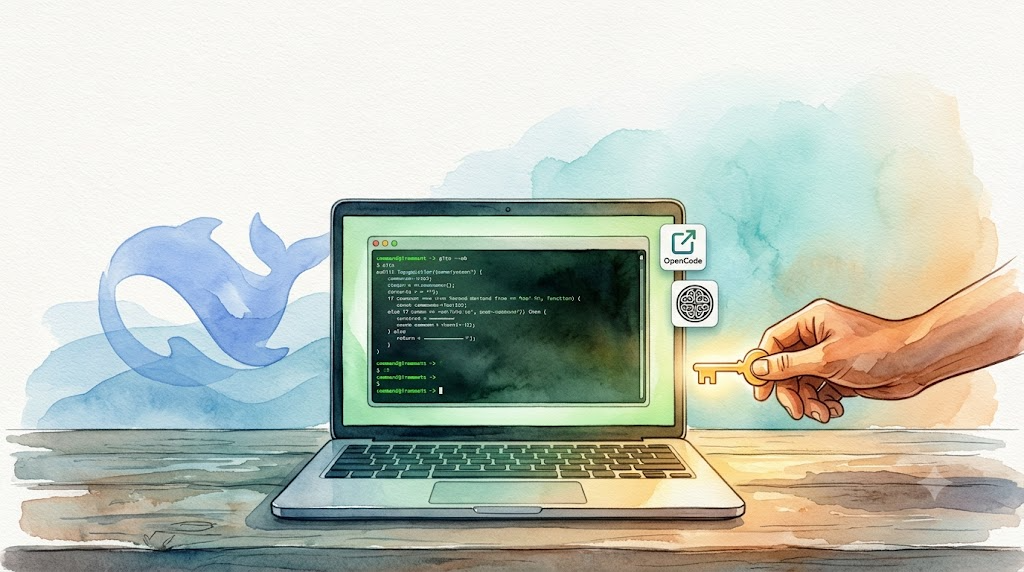
Watercolor: an open laptop with a terminal screen, OpenCode and Zen icons floating nearby, a hand inserting a key into a lock

OpenCode Cold Start: DeepSeek V4 Flash Free in 5 Minutes

This is a bonus article for the “AI Path L1→L2 Upgrade Guide.” If you have not installed OpenCode yet, this guide gets you from zero to running. In Day 8 you learned about autonomous execution AI. The next step is actually installing the thing. OpenCode is an open-source AI coding assistant. It is free, supports multiple models, and has a skill system. Paired with OpenCode Zen, you can use tested models without setting up third-party API keys, including the free DeepSeek V4 Flash. ...

2026-07-06 · 4 min · Alex Wang
A terminal window emitting four data streams: stock quotes, GDP curves, corporate info, academic papers, all flowing from a single source

kdatasrc-helper: Let AI Agents Query Financial Data Directly

Problem: Data Sources Exist, But Agents Can’t Use Them kimi CLI’s datasource plugin is a good piece of work. A-share, HK, and US stock quotes, macroeconomic indicators, corporate registries, academic paper search: six data sources covering most day-to-day investment research needs. Install it, type one command in kimi, and you get results. But I work in opencode, not directly in kimi. When an AI agent needs to query financial data, a few things get in the way. ...

2026-06-21 · 4 min · Alex Wang

omo vs oms: Fallback Chains Deep Dive

This is Part 2 of When Your AI Coding Tool Needs Three Configs. Part 1 covered the config design, file structure, and orchestration philosophy. This article focuses on fallback mechanisms. omo = oh-my-openagent, oms = oh-my-opencode-slim. Model and provider names are anonymized as provider-a/model-x etc. Why Bother Understanding Fallback omo and oms both support fallback—automatic switching to backup when the primary model is unavailable. But their mechanisms differ completely: omo is a multi-layer pipeline that degrades step by step; oms uses startup model selection + runtime abort retry. You need to understand this difference to configure a reliable chain. ...

2026-06-07 · 13 min · Alex Wang

When Your AI Coding Tool Needs Three Configs

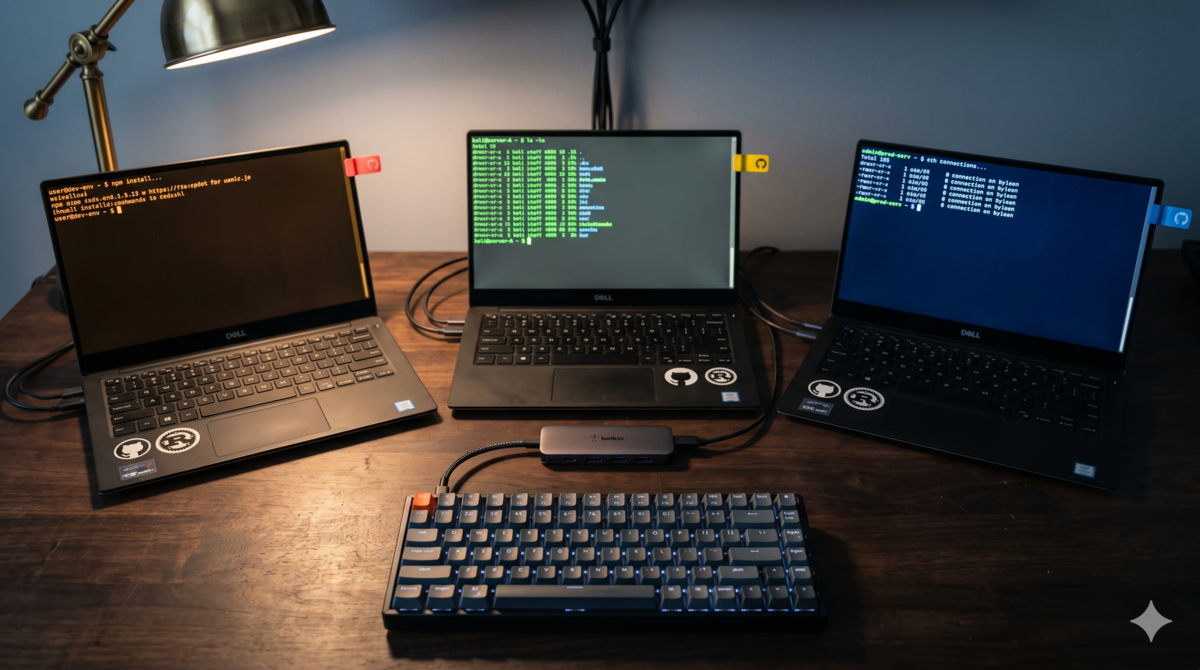
Why I Need Three OpenCode Configs I have three opencode.json files in my ~/.config/opencode/ directory. The reason is simple: I wanted to run oh-my-openagent (omo from here on) and oh-my-opencode-slim (oms from here on) side by side, comparing them to understand where each one’s boundaries lie. omo is the full version—it comes with a batch of built-in agents (Sisyphus, Atlas, Prometheus, Oracle, Explore, Librarian, Metis, Momus, etc.), plus the ones I register on demand. The core is the fallback chain and the Sisyphus orchestrator: throw a refactoring task at Sisyphus, and it breaks the task down for Prometheus to plan, Atlas to execute the plan and distribute subtasks, Explore to search code, Oracle to analyze, then Sisyphus aggregates the results. oms is the slim version—it also has an orchestrator as the main agent responsible for executing tasks, but the difference is in the review phase: oms uses council multi-model consensus, where multiple councillors review results in parallel, and the Council agent synthesizes outputs from all councillors to reach a final conclusion. ...

2026-06-05 · 10 min · Alex Wang
OMO vs SLIM: I Switched Plugins to Save Tokens. Here's What Actually Happened.

OMO vs SLIM: I Switched Plugins to Save Tokens. Here's What Actually Happened.

TL;DR: I switched from OMO to SLIM and ran it for 13 days. Average Tokens per message dropped 3.7% — practically flat. Broken down by task type: coding flat, writing +61%, review -53%, debug +121% (unreliable, tiny sample). Aristotle dropped 68%, but the main cause was an architecture rewrite, not the plugin. “Saving tokens” is not a global fact. It’s local. The real differences are in experience and architecture choices, not in token counts. ...

2026-05-06 · 9 min · Alex Wang
Context rot: an easily overlooked problem in AI coding

Context Rot: An Easily Overlooked Problem in AI Coding

Yesterday someone in a group chat said GPT-5.4 performed worse than Doubao. When they asked questions, the model would often give irrelevant answers without even reading the question. I asked a few follow-up questions and found they had fed it a lot of documents, and the conversation had gone on for many turns. This probably wasn’t the model’s problem—it was context rot. I’ve had similar experiences myself. After talking to a model for a long time, it starts “forgetting” what we discussed earlier, or repeats mistakes that were already corrected. The model hasn’t gotten stupider. The conversation has just gotten too long. ...

2026-04-18 · 14 min · Alex Wang
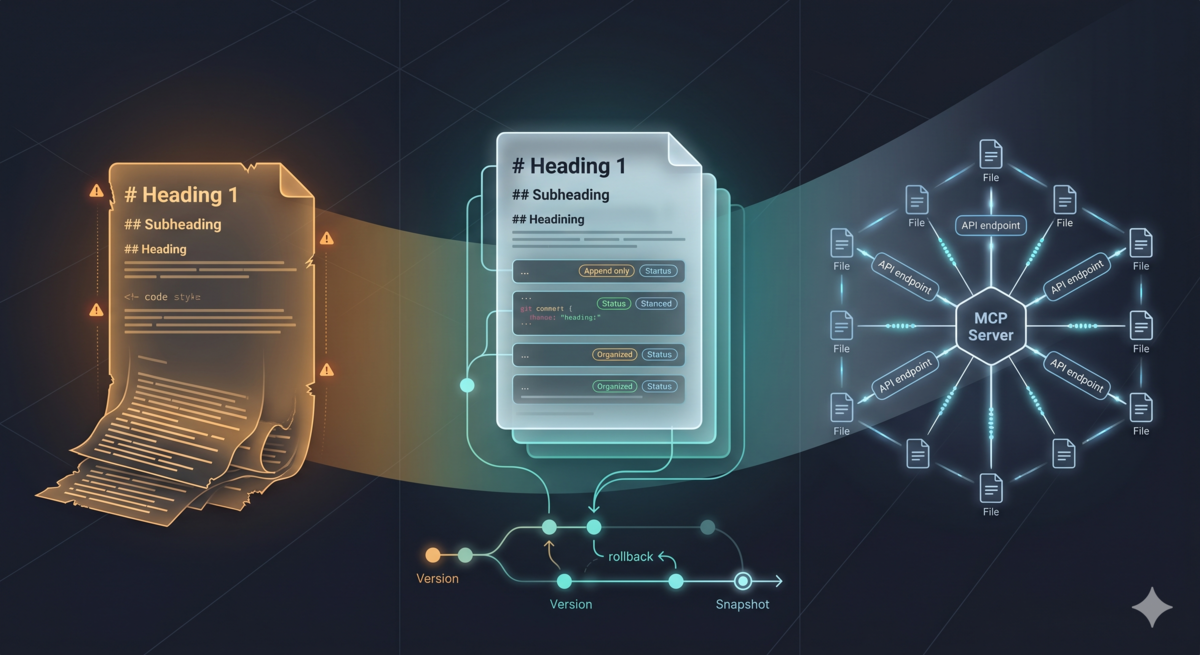
A Markdown's three lives: from static rules to Git-backed MCP Server

A Markdown's Three Lives: From Static Rules to Git-Backed MCP Server

The previous article, From Scars to Armor: Harness Engineering in Practice, ended with Aristotle having a streamlined router (SKILL.md compressed from 371 lines to 84), an on-demand progressive disclosure architecture, and a working reflect→review→confirm workflow. But one thread never got pulled: Where do confirmed rules actually live? This article follows that thread. It wasn’t planned from the start. Three concrete problems in actual use forced the design out, step by step. ...

2026-04-16 · 21 min · Alex Wang
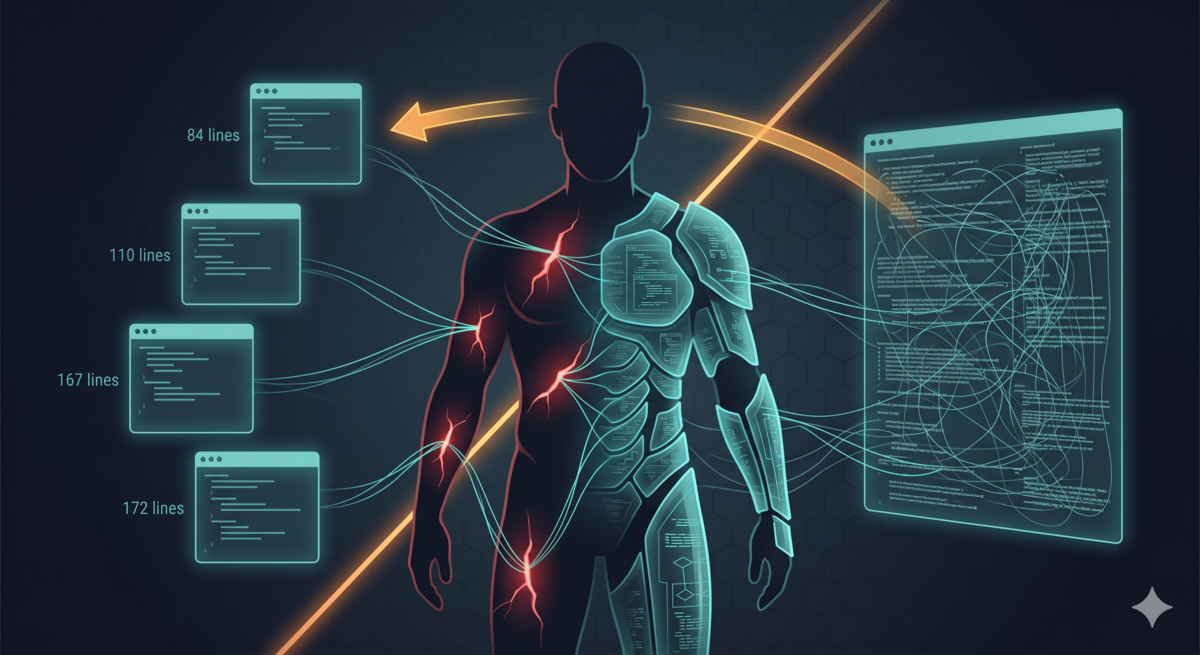
From scars to armor: Progressive Disclosure architecture reforged from four defects

From Scars to Armor: Harness Engineering in Practice

Three articles in. Back to code — and a hard look in the mirror. The first post, Aristotle: Teaching AI to Reflect on Its Mistakes, covered the design philosophy and a smooth implementation — three commits in one go. The second, claude-code-reflect: Same Metacognition, Different Soil, described the adaptation cost of moving the same philosophy to Claude Code — continuous iteration from V1 to V3. The third, Trust Boundaries: The Same Idea on Open and Closed Platforms, proposed a tiered trust model and a harness engineering framework. ...

2026-04-11 · 14 min · Alex Wang
Trust boundary checkpoint between open and constrained AI ecosystems

Trust Boundaries: The Same Idea on Open and Closed Platforms

Fundamentum autem est iustitiae fides, id est dictorum conventorumque constantia et veritas. — Cicero, De Officiis The foundation of justice is fides — constancy and truthfulness in words and agreements. The first two posts told the story of two projects. Aristotle: Teaching AI to Reflect on Its Mistakes runs on OpenCode — three commits, done. claude-code-reflect: Same Metacognition, Different Soil runs on Claude Code — V1 through V3, hitting walls the entire way. ...

2026-04-06 · 16 min · Alex Wang