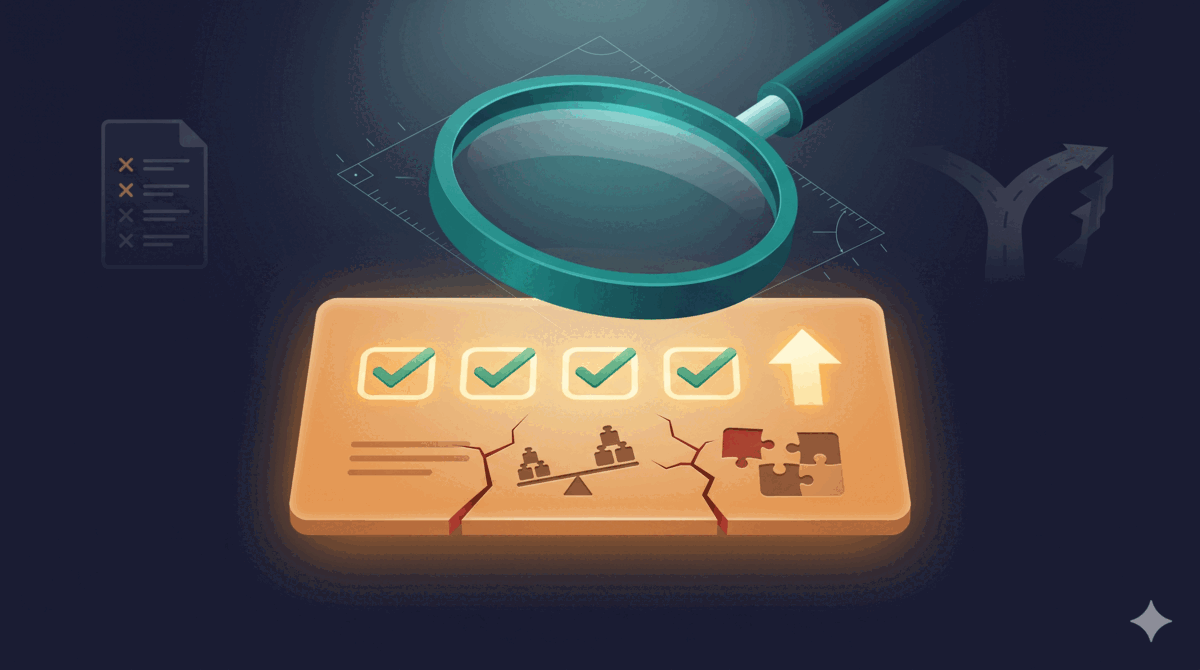
A seemingly perfect experiment report under a magnifying glass revealing two design flaws: rubric bias toward the tested variable and insufficient scenario coverage

AI-Designed Experiments Need Human Review

Series: AI Agent Experiment Methodology (Part 3) Previous: The Experiment Design Was Fine, So Why Did the LLM Still Fail? TL;DR: In a double-blind experiment, Variant B won 4/4 scenarios with clean data. But design review revealed the rubric had 3/8 dimensions directly testing the target variable, exceeding the 1/3 ceiling and nearly becoming a self-fulfilling prophecy. In a separate validation, one scenario scored perfectly while another exposed a defect—if we had run only the first, the defect would have shipped. Both traps were caught by reviewing the design, not by running the experiment. ...

2026-06-01 · 7 min · Alex Wang
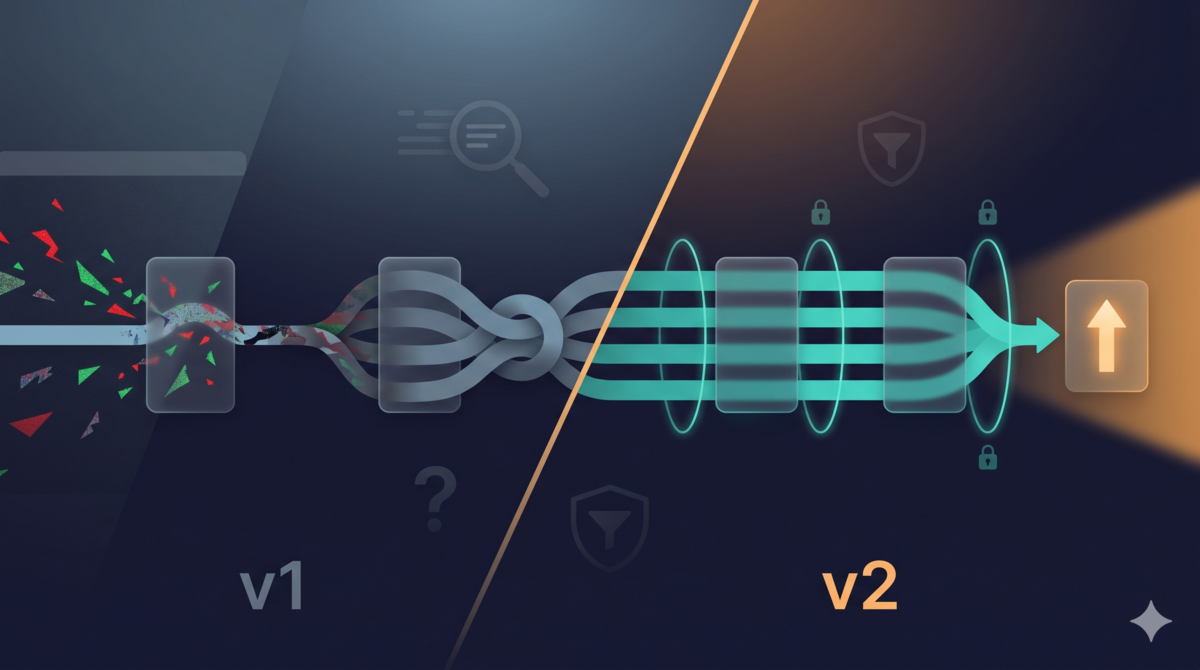
A carefully designed experiment pipeline corrupted by context leaks at two nodes, contrasted with the clean rebuilt version

The Experiment Design Was Fine. The LLM Still Failed.

Series: AI Agent Experiment Methodology (Part 2) Part 1: How to Use Double-Blind Experiments to Validate Skill Changes TL;DR: Round one of the double-blind experiment: B won 3/4 scenarios but failed the magnitude filter. Verdict: “insufficient evidence.” Investigation revealed S1-A’s output was polluted by terminal color codes, and the scorer diligently scored 8 dimensions on ANSI garbage. After reconstructing the execution context, B won 4/4. The failure wasn’t in the experiment design—it was in how sub-agents’ context boundaries were constructed. ...

2026-05-31 · 6 min · Alex Wang
Double-blind experiment diagram showing randomized variant mapping and blind evaluation process

Testing Prompt Changes: Why You Need Double-Blind Experiments

TL;DR: You changed a skill. How do you know it’s actually better, not just confirmation bias? I ran a double-blind experiment: two versions, four scenarios, independent blind scoring. The scorer saw X=2.44, Y=2.41 and said “can’t tell them apart.” After unblinding: simplified version won 4/0. The 0.03 Gap I shortened a review skill from 159 lines to 89 lines. Wanted to verify the simplified version actually worked better, so I ran a double-blind experiment. ...

2026-05-29 · 6 min · Alex Wang
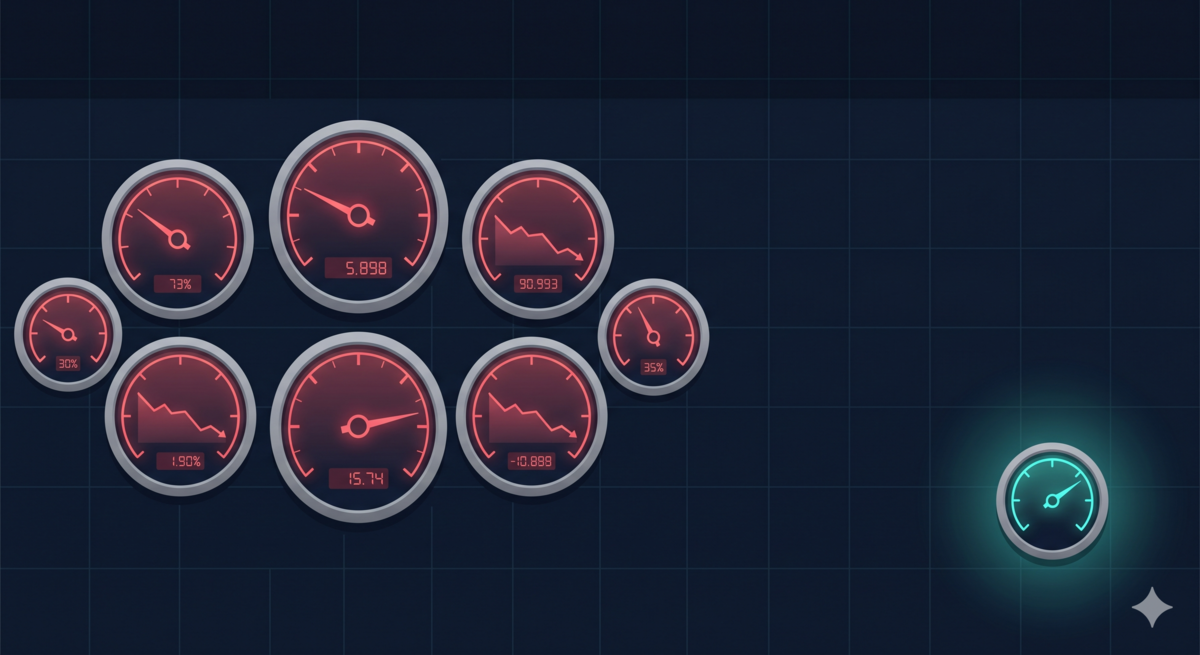
An experiment dashboard where every expected metric shows red — except one gauge in the corner, glowing green

What a Failed Experiment Got Right

Series: Breaking to Build: TDD Process Iterations (first post) TL;DR: I refined Phase 6 (pre-release testing) of the TDD Pipeline from step-driven to principle-driven. The goal was better output. I didn’t get it — the refined version was worse at drilling into individual bugs and building evidence chains. But comparing the two outputs revealed dimensional differences. The refined version was better at component gap checking and cross-bug pattern scanning. Those differences pointed to a judgment call: Phase 6 doesn’t need refining. It needs a layer on top of it. That layer later became Phase 7. ...

2026-05-19 · 5 min · Alex Wang