When Your AI Coding Tool Needs Three Configs

Why I Need Three OpenCode Configs I have three opencode.json files in my ~/.config/opencode/ directory. The reason is simple: I wanted to run oh-my-openagent (omo from here on) and oh-my-opencode-slim (oms from here on) side by side, comparing them to understand where each one’s boundaries lie. omo is the full version—it comes with a batch of built-in agents (Sisyphus, Atlas, Prometheus, Oracle, Explore, Librarian, Metis, Momus, etc.), plus the ones I register on demand. The core is the fallback chain and the Sisyphus orchestrator: throw a refactoring task at Sisyphus, and it breaks the task down for Prometheus to plan, Atlas to execute the plan and distribute subtasks, Explore to search code, Oracle to analyze, then Sisyphus aggregates the results. oms is the slim version—it also has an orchestrator as the main agent responsible for executing tasks, but the difference is in the review phase: oms uses council multi-model consensus, where multiple councillors review results in parallel, and the Council agent synthesizes outputs from all councillors to reach a final conclusion. ...
2026-06-05 · 10 min · Alex Wang
Watercolor style: a winding path leading to a small flag on a hilltop, with broader mountain ranges and clouds stretching beyond

AI Path L0→L1 Upgrade Guide (5): Graduation Checklist & Next Steps

📖 This is Part 5 of 5 in the “AI Path L0→L1 Upgrade Guide” series: Series Navigation + Graduation Checklist. Series Navigation Part Topic Core Content Part 1 Understanding Your Tools LLM fundamentals (not a search engine), working memory vs. long-term memory, mainstream platforms and specialized tools Part 2 From Vague Questions to Precise Instructions The RBGO prompt framework, Chain-of-Thought reasoning, format constraints Part 3 Turning AI Into Your Collaboration Partner Iterative follow-up questions, context management (new conversations / progress summaries / chunked processing), role-playing Part 4 Building Your Personal System Prompt library, scenario-to-tool mapping (international and China options), layered knowledge management Part 5 Graduation & Next Steps L1 graduation checklist, L1→L2 dual-path preview ...

2026-05-30 · 2 min · Alex Wang
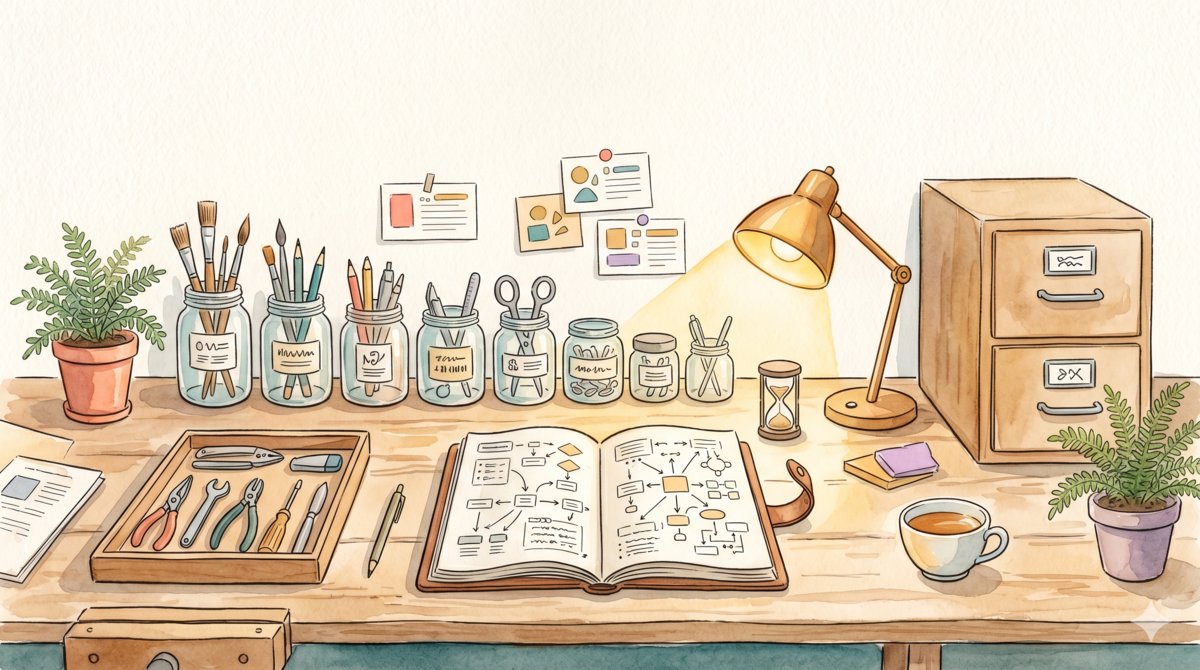
Watercolor style: a neatly organized workbench with labeled glass jars, a leather journal, curated tools, and a two-drawer cabinet symbolizing tiered knowledge management

AI Path L0→L1 Upgrade Guide (4): Building Your Personal System

📖 This is Part 4 of 5 in the “AI Path L0→L1 Upgrade Guide” series. Part 1: Understanding Your Tools · Part 2: From Vague Questions to Precise Instructions · Part 3: Turning AI Into Your Collaboration Partner · Part 4: Building Your Personal System · Part 5: Graduation & Next Steps Over three weeks you’ve picked up follow-up questions, context management, role-playing… the skills are piling up, and here’s the problem: how do you manage all these scattered abilities in one place? Week 4 is about exactly that: building a prompt library, choosing the right tools, and setting up knowledge management. Turning what you’ve learned into a personal system. ...

2026-05-26 · 4 min · Alex Wang
Watercolor illustration: three artisan tools on a warm wooden workbench: a wide terracotta bowl, an elegant glass carafe, and a segmented wooden organizer, each suited for different tasks, no ranking implied

Pick Your AI by the Job, Not the Ranking

Tried ChatGPT, Claude, Gemini, DeepSeek… and still can’t decide which one to stick with? Here’s the thing: that’s the wrong question. There is no universally best AI, only the one that fits what you’re doing right now. What’s your scenario? “I want a general-purpose assistant for everything” → ChatGPT. As of May 2026 the default is GPT-5.5, well-rounded, with the richest plugin ecosystem. If you pick just one, this is a solid choice. ...

2026-05-15 · 1 min · Alex Wang
An arched gateway inscribed with WHY, two rods of different length and color on the ground

From Anthropic's Alignment Research to a Prompt Design Insight

TL;DR: Anthropic’s alignment research shows that teaching a model why works better than teaching it what — misalignment dropped from 22% to 3%. This post breaks down four experiments and distills three lessons you can use in prompt design. I ran an A/B test comparing two prompt strategies. One group got positive examples: “do it like this.” The other got no examples. Instead, the AI had to explain why a choice was correct before acting on it. ...

2026-05-14 · 7 min · Alex Wang
Watercolor illustration: a person at a cozy desk, holding a glowing translucent orb representing the essence of understanding LLMs

AI Path L0→L1 Upgrade Guide (1): Understanding Your Tools

📖 This is Part 1 of 5 in the “AI Path L0→L1 Upgrade Guide” series. Series navigation will be updated once all parts are published. Introduction: Sound Familiar? I’ve watched a lot of friends use AI tools, and I keep noticing the same pattern. They’re not strangers to ChatGPT or Claude, using them casually from time to time, but their experience is wildly inconsistent. Sometimes the AI delivers a jaw-dropping answer; other times it completely misses the point, producing something unusable. ...

2026-05-11 · 5 min · Alex Wang
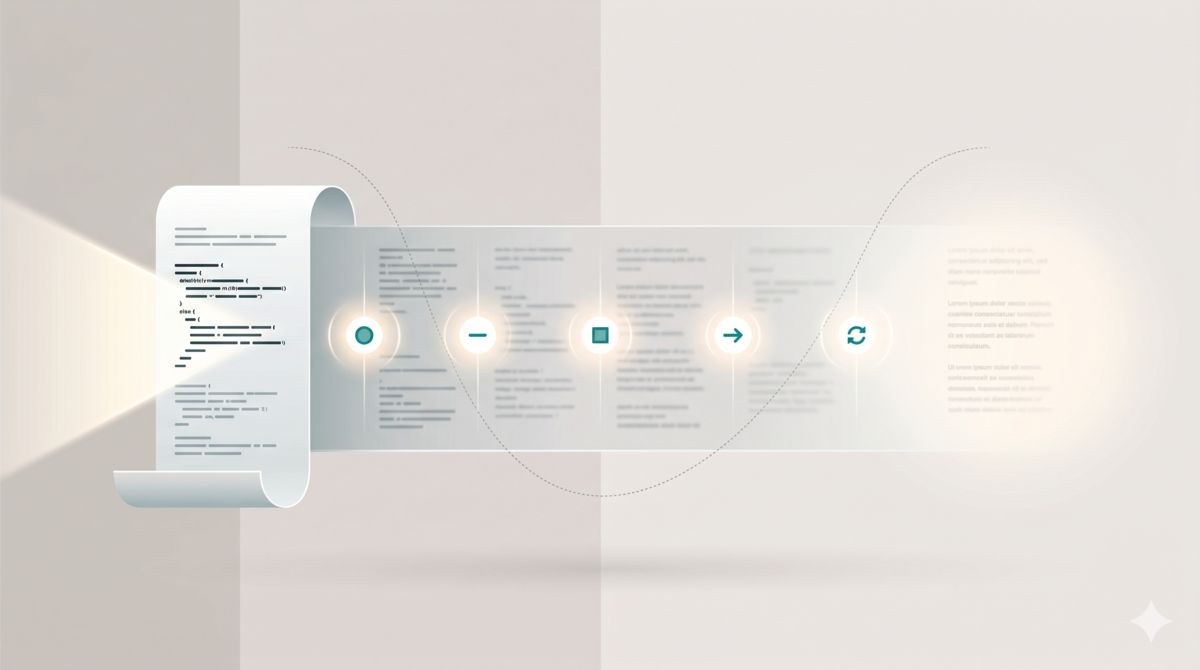
Context rot: an easily overlooked problem in AI coding

Context Rot: An Easily Overlooked Problem in AI Coding

Yesterday someone in a group chat said GPT-5.4 performed worse than Doubao. When they asked questions, the model would often give irrelevant answers without even reading the question. I asked a few follow-up questions and found they had fed it a lot of documents, and the conversation had gone on for many turns. This probably wasn’t the model’s problem; it was context rot. I’ve had similar experiences myself. After talking to a model for a long time, it starts “forgetting” what we discussed earlier, or repeats mistakes that were already corrected. The model hasn’t gotten stupider. The conversation has just gotten too long. ...

2026-04-18 · 15 min · Alex Wang
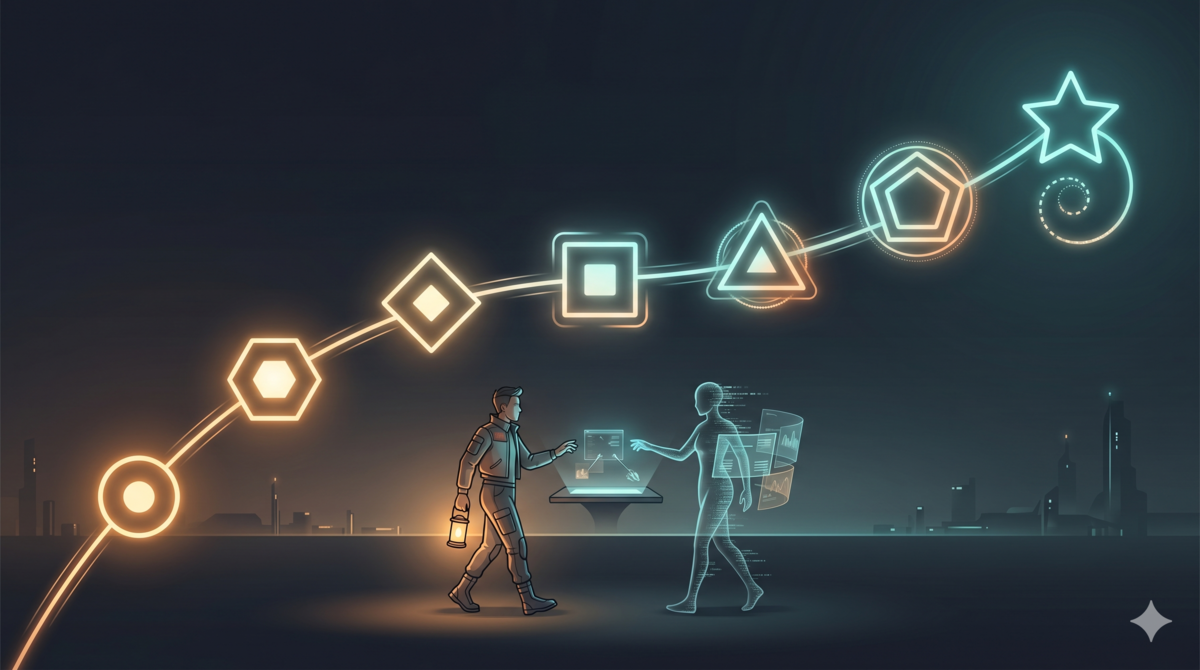
Seven human-AI collaboration patterns from the Aristotle project

Looking Back: Seven Human-AI Collaboration Patterns in the Aristotle Project

Five articles in. Time to step back and look at the path itself. Aristotle: Teaching AI to Reflect on Its Mistakes covered the design philosophy and initial implementation. claude-code-reflect: Same Metacognition, Different Soil told the story of porting across platforms. Trust Boundaries: One Idea, Two Systems proposed a trust tiering model. From Scars to Armor: Harness Engineering in Practice validated the theory through refactoring. A Markdown’s Three Lives: From Static Rules to a Git-Backed MCP Server evolved the rule storage from append-only to the GEAR protocol. ...

2026-04-16 · 11 min · Alex Wang
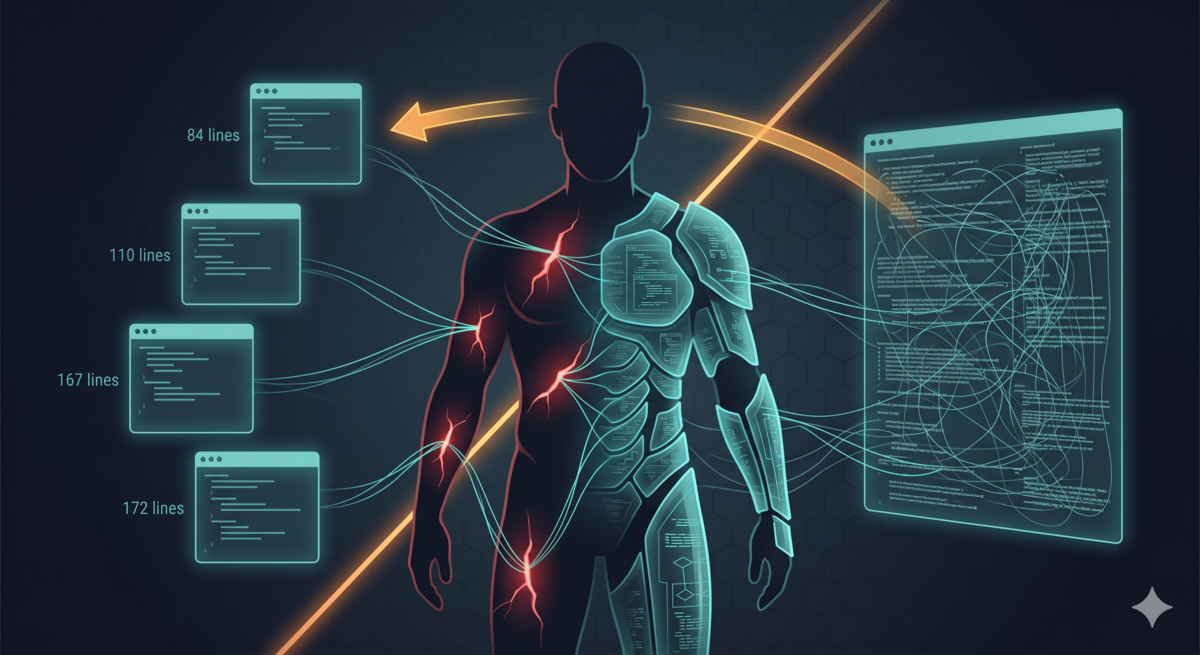
From scars to armor: Progressive Disclosure architecture reforged from four defects

From Scars to Armor: Harness Engineering in Practice

Three articles in. Back to code, and a hard look in the mirror. The first post, Aristotle: Teaching AI to Reflect on Its Mistakes, covered the design philosophy and a smooth implementation: three commits in one go. The second, claude-code-reflect: Same Metacognition, Different Soil, described the adaptation cost of moving the same philosophy to Claude Code: continuous iteration from V1 to V3. The third, Trust Boundaries: The Same Idea on Open and Closed Platforms, proposed a tiered trust model and a harness engineering framework. ...

2026-04-11 · 14 min · Alex Wang
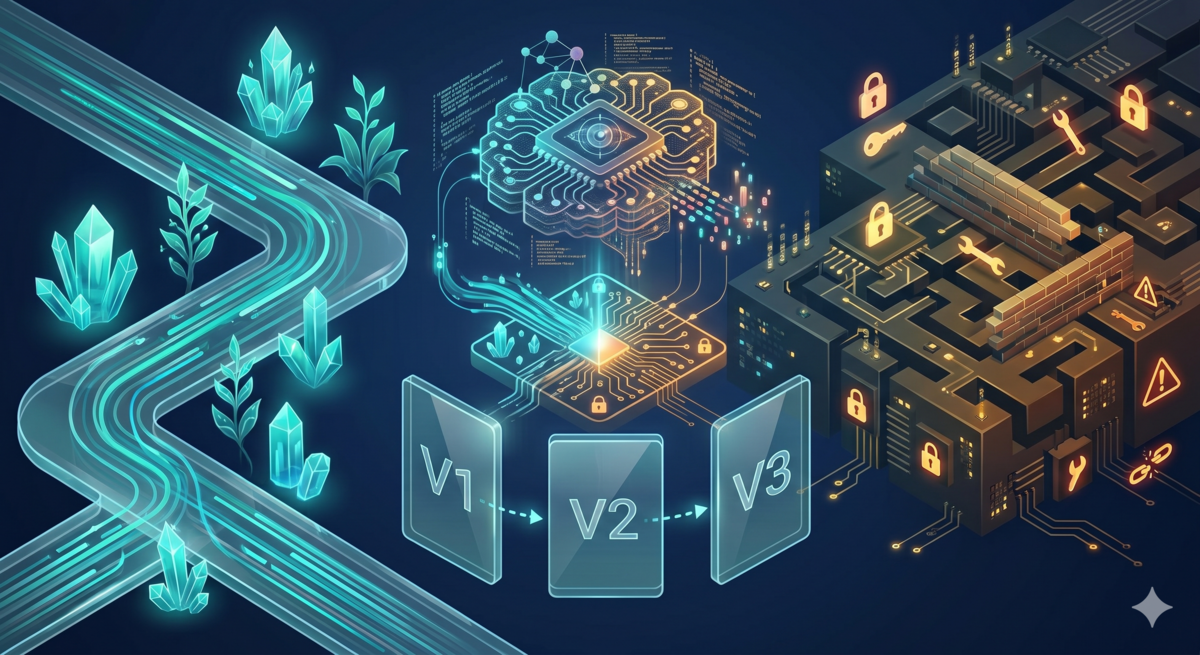
Same metacognition landing on different platform soils

claude-code-reflect: Same Metacognition, Different Soil

Same metacognitive ability, different soil. The growing patterns look nothing alike. My previous post, Aristotle: Teaching AI to Reflect on Its Mistakes, had three core principles: immediate trigger, session isolation, human in the loop. These sound platform-agnostic. But when I moved the same philosophy to Claude Code, I discovered something: platform differences are much larger than expected. First Hurdle: Plugin System Differences Claude Code’s plugin and OpenCode’s skill are completely different systems. Just getting the plugin installed and recognized took several rounds of struggle. ...

2026-04-06 · 9 min · Alex Wang