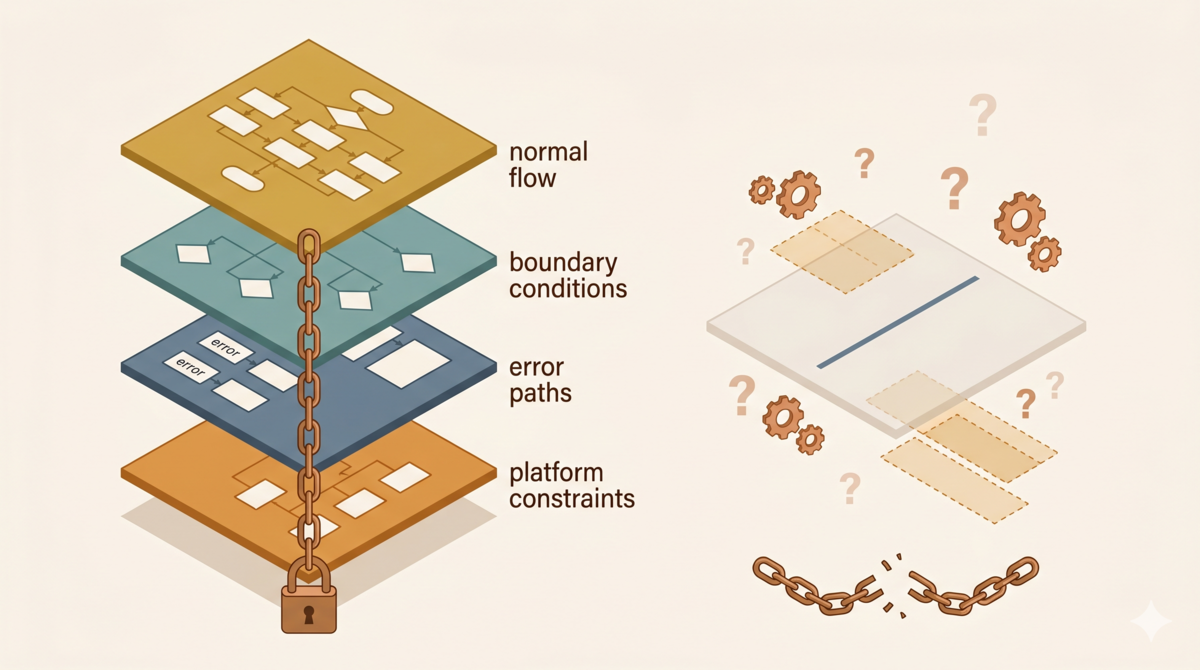
Structured requirements vs one-liner: the trap of AI auto-filling gaps

Why AI-Assisted Development Needs Structured Requirements First: Lessons from the GEAR Protocol

This is the second article in the “Taming AI Coding Agents with TDD” series. The first article covered requirement anchoring at the test layer[1]. Tests assume clear requirements. This one goes upstream: to the practice of disambiguating requirements before a single line of code gets written. The v1 Lesson: One-Line Requirement, 371 Lines of Pollution Aristotle v1 had no GEAR protocol[2]. No role separation. The entire reflection feature lived in a single 371-line SKILL.md. The requirement was roughly one sentence: the system should detect when a user corrects an AI mistake, then generate a reusable rule. ...
2026-04-25 · 8 min · Alex Wang
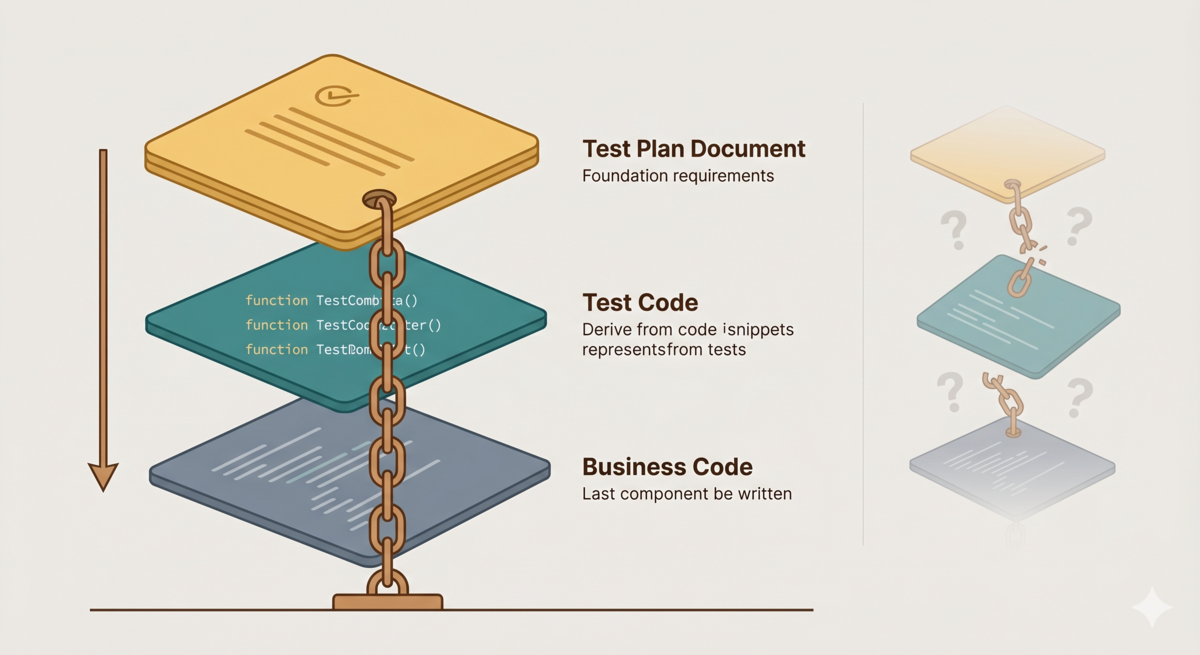
Requirement anchoring: test plan before test code before business code

Write Test Plans Before Test Code: Requirement Anchoring in AI Development

This is the first article in the series “Taming AI Coding Agents with TDD.” The series has one thesis: AI-assisted development demands stricter process discipline than traditional development, and here is exactly how to enforce it at every step. The series follows the pipeline order: requirements, design, testing, review, implementation. This article starts at the testing layer. During Aristotle’s third refactoring, the test plan document was where I learned the hardest lesson. I’ll cover this layer first, then work backward and forward in subsequent posts. ...

2026-04-23 · 16 min · Alex Wang