Yesterday’s discussion covered follow-up questions: three questions to dig out the hidden assumptions behind an AI answer. The catch is, you need to know what to ask. Some blind spots you simply can’t see from your own perspective.
That’s when you give AI a different identity.
The Devil’s Advocate
Please act as a strict reviewer. Go through this plan point by point and identify every risk and weakness. Don’t hold back — the sharper, the better.
This prompt does one thing: it shifts AI from “help you finish the task” to “help you find what’s wrong with it.” The same plan, AI as an assistant tends to agree with you; AI as a reviewer is more likely to push back. You need the version that pushes back.
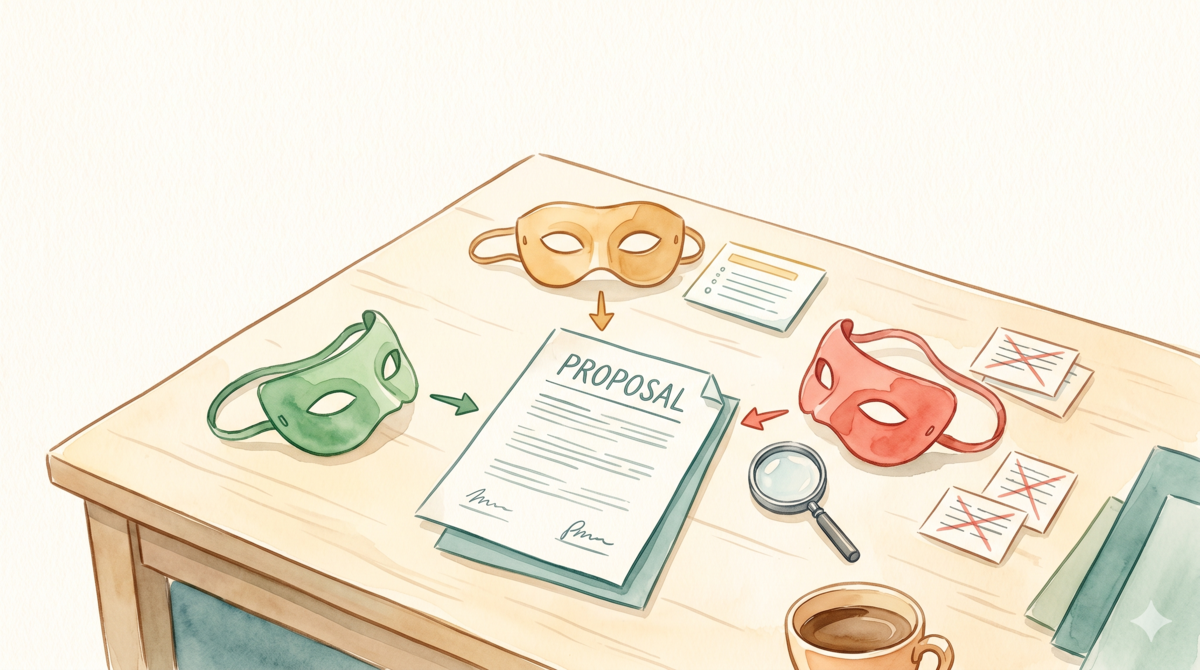
Level Up: Make the Sides Debate
First, argue in favor with three supporting reasons. Then switch roles — argue against each point. Finally, give your synthesized recommendation as a neutral advisor.
This isn’t about getting a “balanced take.” Each role surfaces different arguments. You see the same question from three angles, and whichever argument you didn’t think of is your blind spot.
I have a habit when writing proposals: I get excited about “this is a great idea.” Every time I finish a plan, I run this three-part prompt to get the defense, critique, and neutral synthesis all in a single pass. After that one pass, most of the weaknesses I can think of are already on the table.
Role-playing and follow-up questions are two ways of doing the same thing. They help you see what you can’t see on your own. Follow-up relies on you asking actively; role-playing makes AI challenge you proactively. Use both, and your blind spots shrink. Once these techniques feel natural, you’ll want a place to organize them. Tomorrow I’ll talk about building that system.
📖 Series Navigation