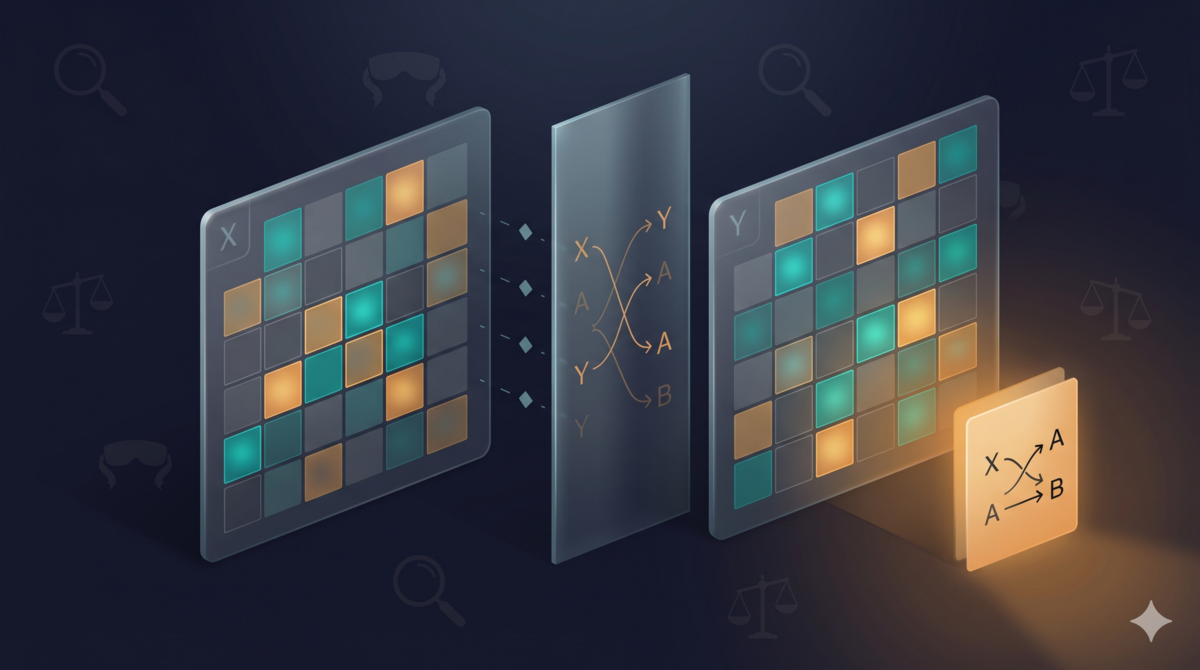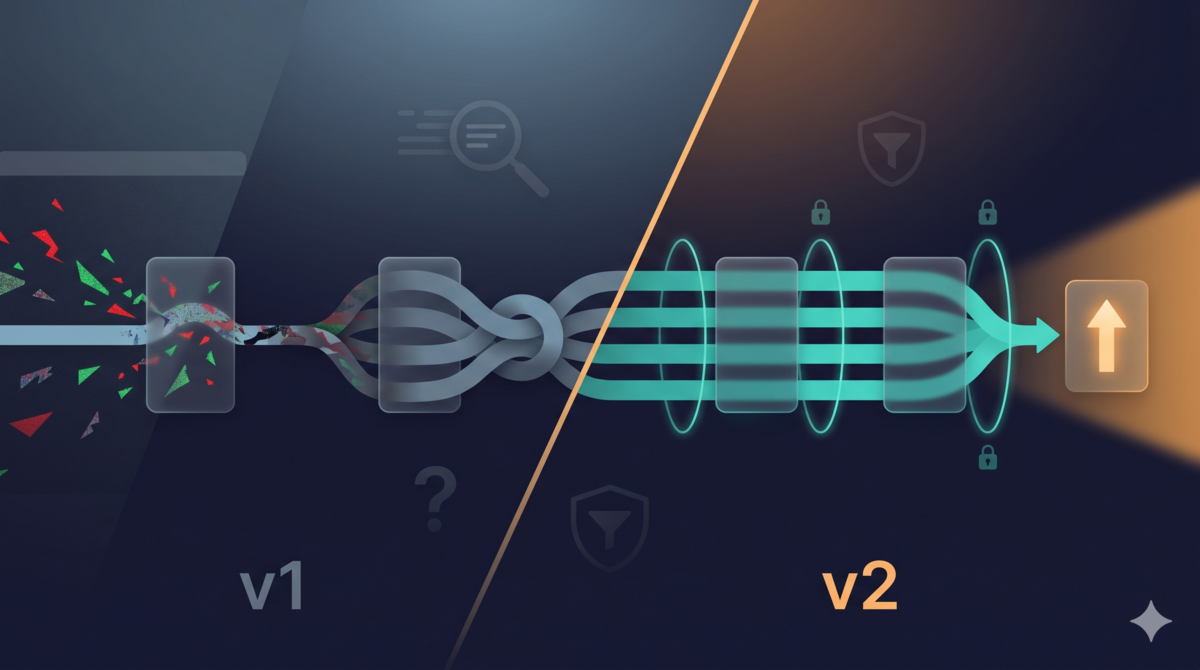
A bloated prompt pruned into compact strategy genes, with redundant fragments removed and core constraints preserved

Strategy Genes: Pruning Review Prompts with Genetic Algorithm Thinking

Series: Classic Theory Meets Agent Practice (Part 2) Previous: Dual-Pass Review: Why Recall and Precision Cannot Both Win Next: Dimension Experiments: Can a 36-Year-Old Book Fix Your Review Coverage? TL;DR: A review prompt went from 317 lines to 135 lines (-58%), and review quality improved by 29%. What I removed was not useful procedure, but redundant content the model could infer on its own. What stayed were strategy genes: irreplaceable constraints, negative examples, and tone locks. ...

2026-05-24 · 10 min · Alex Wang
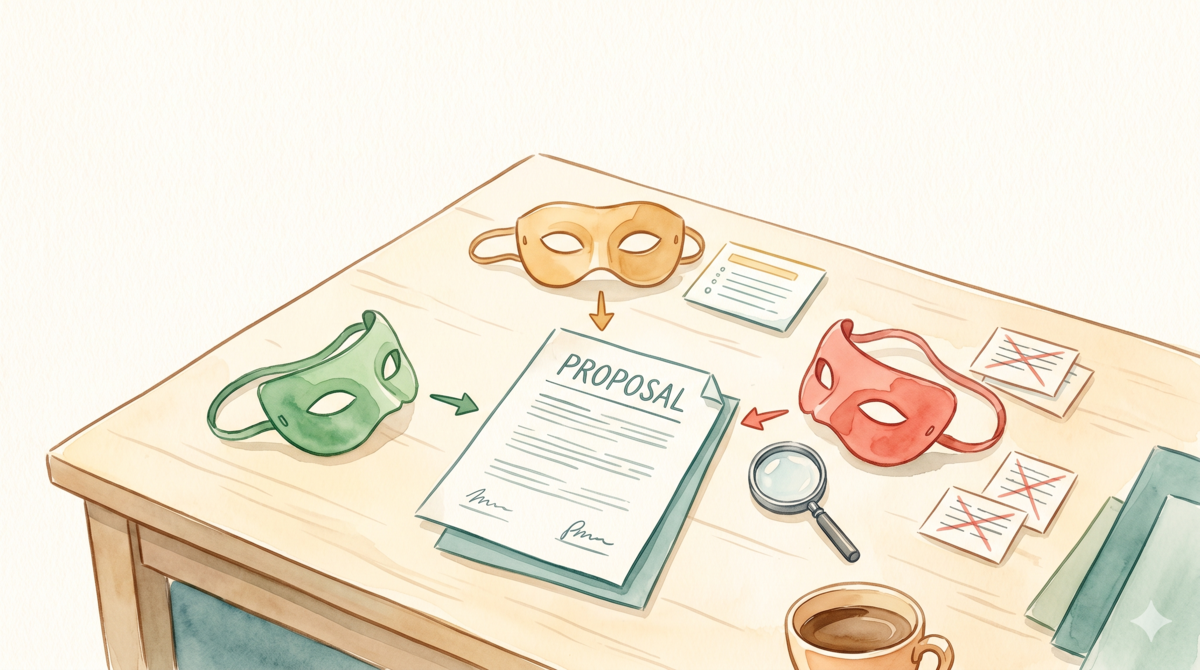
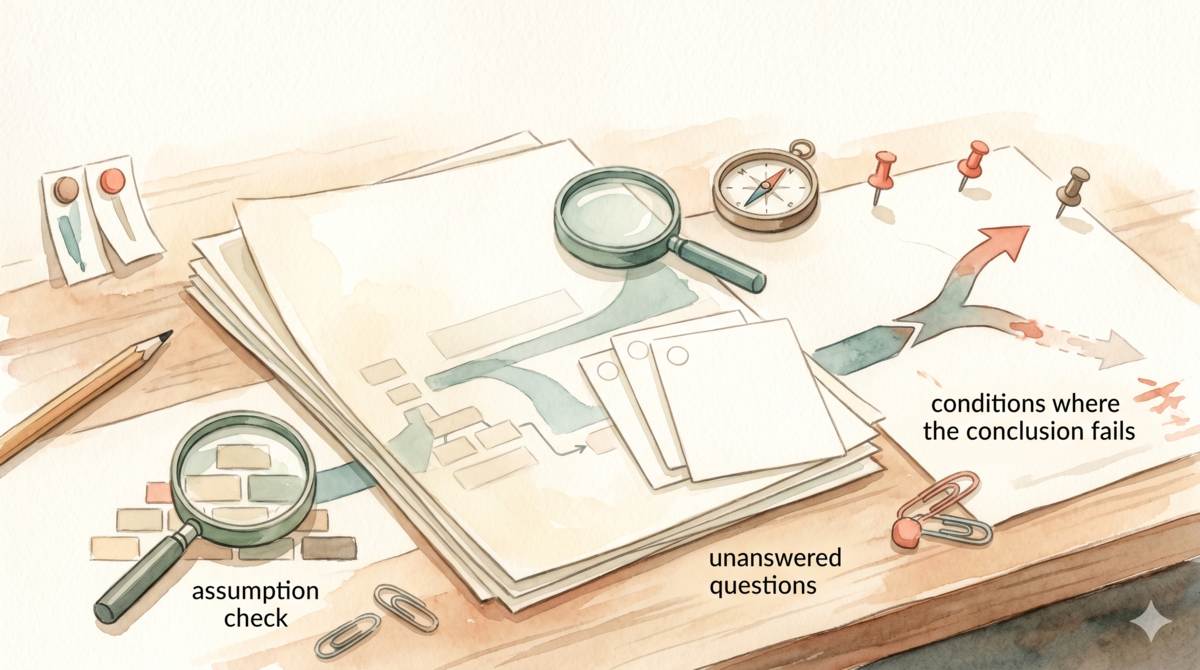
Watercolor style: a translucent stack of papers on a desk with three follow-up checkpoints, symbolizing hidden assumptions behind AI answers

Advanced Follow-Up: 3 Questions That Expose AI's Hidden Assumptions

The previous post was about how long conversations drift. After writing it, I noticed something else: drift does not only happen after a conversation gets long. It can also happen inside any answer that looks complete. AI answers quickly, and its conclusions often sound smooth. But it rarely says upfront: what assumptions does this conclusion depend on? If those assumptions are not checked, I end up accepting them by default. Accept enough unchecked assumptions, and the later analysis may be built on the wrong foundation. ...

2026-05-24 · 3 min · Alex Wang
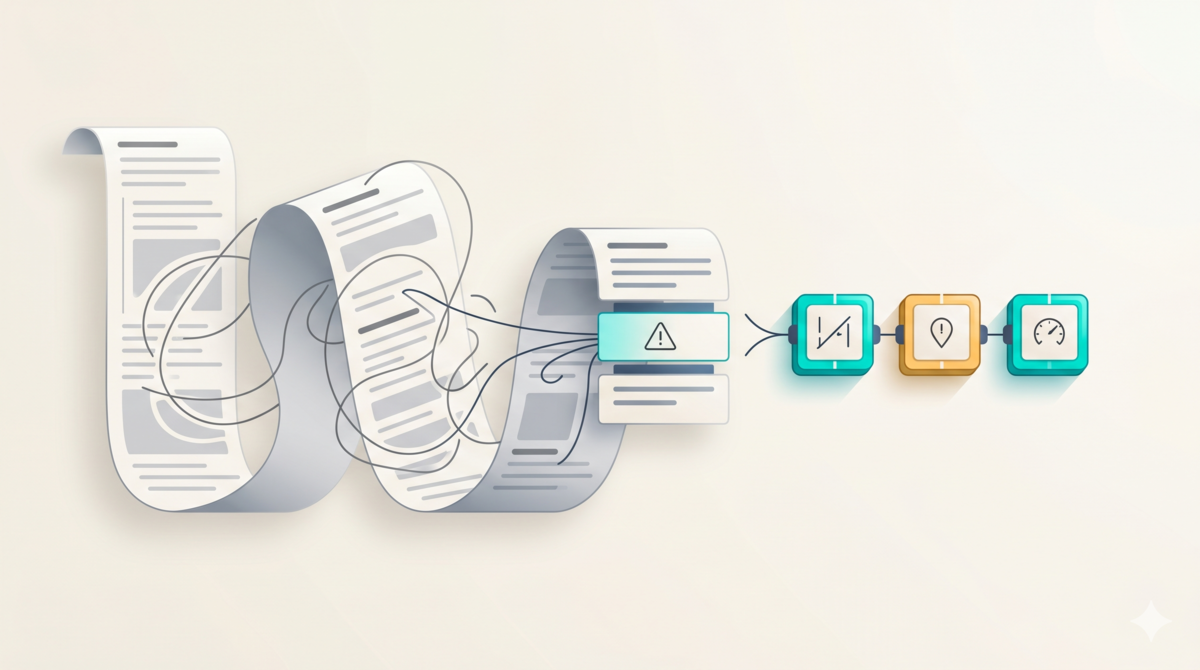
Watercolor style: a winding paper trail across a desk, with three stations symbolizing mixed directions, data citation errors, and requirement bleed-through

Long Conversation Failures: Lessons from 3 Drift Disasters

The previous exercise was to run a 15-turn conversation with AI, using progress summaries and new conversations as checkpoints. If you actually did it, you probably noticed something else too: drift doesn’t always look the same. The three cases below are all failures I’ve run into myself. Here’s what happened, why it happened, and how to avoid it. Failure 1: Work Directions Got Mixed Together What Happened I was figuring out the approach for a project. I first discussed Approach A with AI, building a data dashboard. After 4 turns, it didn’t feel deep enough, so I switched to Approach B, automated reports, for another 3 turns. Then I thought maybe I could combine Approach C’s real-time push capability. Three directions kept jumping around in the same conversation for a dozen turns. ...

2026-05-23 · 7 min · Alex Wang
Two funnels side by side: the left one wide-mouthed catching many candidate issues, the right one narrow filtering only the valuable findings

Cascade Retrieval: A 15-Year-Old IR Trick Fixed My Design Review Agent

Series: Classic Theory Meets Agent Practice (Part 1) TL;DR: A design review agent needs to find every issue AND avoid false positives. One agent can’t do both. Borrowing cascade retrieval from information retrieval, a 15-year-old method, I split it into two: a Recall Pass that casts a wide net, and a Precision Pass that filters strictly. Real defects get caught earlier, and the risk of rework during development drops. This series is about one thing: how classic theoretical frameworks directly guide AI agent engineering. The first post starts with cascade retrieval, a 15-year-old method from information retrieval (IR), and the much older Recall vs. Precision tradeoff it sits on top of. The 1966 Cranfield II experiments proved these two goals fight each other. Applying that old problem’s newer solution to design review made a striking difference. ...

2026-05-22 · 9 min · Alex Wang
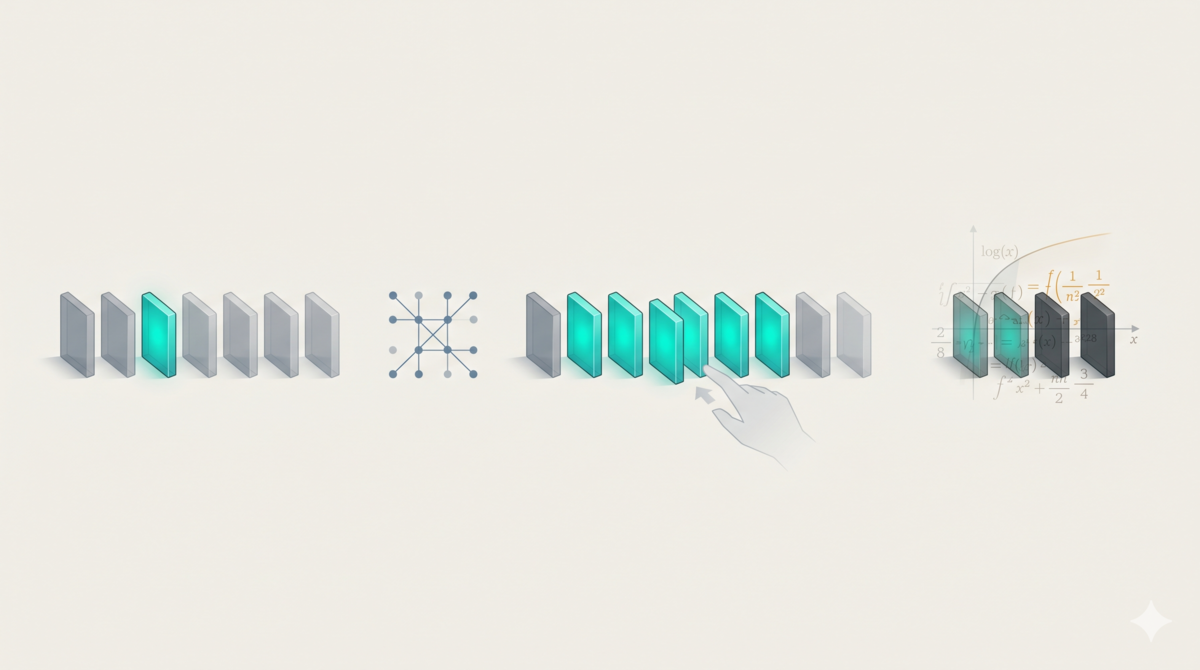
Watercolor style: a winding river flows from upper left to lower right, with a small ferry crossing marker in the middle, symbolizing a progress calibration point in a long conversation

Today's Practice: A 15-Turn Conversation Experiment

Today’s Practice Pick a real multi-step task you have on hand, and hold a conversation with AI for at least 15 turns (one question + one answer = one turn). Example tasks: “Help me plan a family trip (destination, itinerary, budget, packing list)” “Help me set up a personal blog from scratch (pick a platform, choose a theme, write the first post)” “Help me analyze a career decision (take stock of where I am, pros and cons, action plan)” Let the conversation unfold naturally without forcing strict structure at first, but do pause around turn 10 and run the progress-summary checkpoint. Send this message: ...

2026-05-22 · 2 min · Alex Wang
A microscope and a telescope side by side, with a dashed line between them labeled 'the invisible blank layer'

The Invisible Blank Layer

Series: Breaking to Build: TDD Process Iterations (Post 3) Post 1: What a Failed Experiment Got Right · Post 2: Using the Method to Improve the Method TL;DR: Phase 6 already does diagnostics at the integration level — drilling into each bug’s root cause. What it doesn’t do: cross-defect pattern scanning, component gap checking, execution order analysis. Those belong to Phase 7. In small systems, Phase 7 catches a few more bugs. As the system grows, those same three tasks produce something different — building test infrastructure, hardening CI rules, driving architectural evolution. Phase 7 doesn’t make architecture decisions. But it provides the scarcest input for those decisions: evidence-based problem localization. ...

2026-05-21 · 6 min · Alex Wang
Watercolor illustration: two people across a large table covered in notes and sketches, deep in discussion, symbolizing iterative collaboration through multi-turn conversation

AI Path L0→L1 Upgrade Guide (3): Turning AI Into Your Collaboration Partner

📖 This is Part 3 of 5 in the “AI Path L0→L1 Upgrade Guide” series. Part 1: Understanding Your Tools · Part 2: From Vague Questions to Precise Instructions · Part 3: Turning AI Into Your Collaboration Partner · Part 4: Building Your Personal System · Part 5: Graduation & Next Steps TL;DR: Three core skills — follow-up iteration (the first answer is almost never the best), context management (periodic summaries, start fresh after ~20 turns, split complex tasks), and role-playing (assigning a role changes output depth). This week’s practice focus: deliberately run a 15+ turn long conversation and proactively do a progress summary. ...

2026-05-21 · 8 min · Alex Wang
A ruler measuring its own scale marks for redundancy, then trimming the excess marks away

Using the Method to Improve the Method

Series: Breaking to Build: TDD Process Iterations (Post 2 of 3) Previous: What a Failed Experiment Got Right · Next: The Invisible Blank Layer TL;DR: The TDD Pipeline taught “give principles, not steps” — but it had grown into a step-driven tool itself. I stripped the operational steps from Phases 1 through 5, keeping only principles, risk hints, and counterexamples. The model independently derived the steps I had deleted. Output quality held. The reason: Phases 1 through 5 are creative phases that need room to diverge. Removing the fixed track actually helped. The same strategy failed on Phase 6 — next post explains why. ...

2026-05-20 · 6 min · Alex Wang
Watercolor style: six molds in a row, each labeled with a different geometric shape, symbolizing different output format constraints

Format Constraints Cheat Sheet: 6 Prompt Templates for Ready-to-Use AI Output

Tip Card: Format Constraints Cheat Sheet Spend 10 seconds specifying a format in your prompt, save 10 minutes of reformatting afterward. Here are 6 of the most useful format constraints, each with a prompt template you can use right away. 1. Markdown Table Best for: structured information that needs comparison or summarization. “Output as a Markdown table with the following columns: Name, Description, Use Case, Notes.” 2. Numbered List Best for: steps, key points, quick scanning. ...

2026-05-20 · 2 min · Alex Wang
An experiment dashboard where every expected metric shows red, except one gauge in the corner, glowing green

What a Failed Experiment Got Right

Series: Breaking to Build: TDD Process Iterations (first post) TL;DR: I refined Phase 6 (pre-release testing) of the TDD Pipeline from step-driven to principle-driven. The goal was better output. I didn’t get it — the refined version was worse at drilling into individual bugs and building evidence chains. But comparing the two outputs revealed dimensional differences. The refined version was better at component gap checking and cross-bug pattern scanning. Those differences pointed to a judgment call: Phase 6 doesn’t need refining. It needs a layer on top of it. That layer later became Phase 7. ...

2026-05-19 · 5 min · Alex Wang